
The policy brief discusses the vulnerability to snakebite envenoming and mortality in Maharashtra, highlighting its impact on marginalized populations. It stresses the need for timely medical interventions like anti-venoms to prevent morbidity and mortality. Using Health Management Information System data, it identifies seasonal patterns of snakebite emergencies, emphasizing the peak during monsoon months and its correlation with agricultural activities.
Category: Policy Briefs
PB No. 9 Coverage of vaccination at birth in Maharashtra
This policy brief assesses the coverage and factors influencing the administration of critical birth doses of vaccines in the state of Maharashtra, focusing on Bacille Calmette-Guerin (BCG), Hepatitis B, Oral poliovirus vaccine (OPV), and Vitamin K1. Utilizing Health Management Information System (HMIS) data from FY18 to FY20, the policy brief reveals critical patterns of birth vaccine coverage in the state.
PB No. 8 Preventing stillbirths in Maharashtra: where to focus?
This policy brief focuses on the concerning issue of stillbirths in Maharashtra, India, with a particular emphasis on understanding its prevalence, identifying high-burden clusters, and outlining actionable policy recommendations. We present an analysis of Health Management Information System (HMIS) and National Family Health Survey (NFHS) data to highlight the persistently high stillbirth rates in certain districts.
PB No. 7 Analysis of the seasonal variations in birth in Maharashtra – HMIS 2017-20
This policy brief raises a concern about the persistently low rates of deworming among pregnant women, as reported through the Health Management Information System (HMIS) data. Deworming using a single dose of Albendazole during the pregnancy is an important component of the package of services under the ante-natal-care (ANC). The adverse effects of worm infestation on morbidity, malnutrition and other peri-natal outcomes are well documented. Yet coverage rates for albendazole remain significantly low compared to distribution of IFA and Ca tablets, both multi-dose, and the Tetanus Toxoid (TT) injection. This ‘coverage deficit’ for deworming service amounts to filling a ‘leaking bucket’. The helminths have the last laugh, notwithstanding the high coverage under other ANC components. It is high time that this deficit is eliminated with all seriousness.
PB No. 6 Albendazole- The Step Child of Maternal Healthcare System
This policy brief raises a concern about the persistently low rates of deworming among pregnant women, as reported through the Health Management Information System (HMIS) data. Deworming using a single dose of Albendazole during the pregnancy is an important component of the package of services under the ante-natal-care (ANC). The adverse effects of worm infestation on morbidity, malnutrition and other peri-natal outcomes are well documented. Yet coverage rates for albendazole remain significantly low compared to distribution of IFA and Ca tablets, both multi-dose, and the Tetanus Toxoid (TT) injection. This ‘coverage deficit’ for deworming service amounts to filling a ‘leaking bucket’. The helminths have the last laugh, notwithstanding the high coverage under other ANC components. It is high time that this deficit is eliminated with all seriousness.
PB No. 5 District level analysis of NFHS-4 and NFHS-5 data for Andhra Pradesh
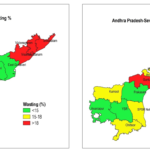
NFHS – 4 provides, for the first time a district level data on nutritional status of children below the age of 5 years. This provides an excellent and timely opportunity to plan for eradication of child malnutrition at the district level. A quick preliminary analysis of the district level child malnutrition levels, reveals certain important aspects. This is presented below.
PB No. 4 NFHS-4 data analysis at district level for child malnutrition in Odisha
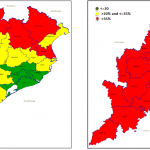
NFHS – 4 provides, for the first time a district level data on nutritional status of children below the age of 5 years. This provides an excellent and timely opportunity to plan for eradication of child malnutrition at the district level. A quick preliminary analysis of the district level child malnutrition levels, reveals certain important aspects. This is presented below.
PB No. 3 NFHS 4 vis-à-vis NFHS 5: Progress in Maharashtra on key indicators
The National Family Health Survey (NFHS) is an important source of information on the periodic progress made on several key health indicators. Among other things, the survey tracks nutritional status of mother and child and the quality of antenatal and post-natal services at the state and district level. Recently, the NFHS 5 data (Phase-1) was released for select states and their districts facilitating for the first time a panel data analysis at the district level.
PB No. 2 Preterm delivery patterns in Jharkhand as revealed by HMIS data 2017-18 to 2019-20
This note analyses the data on preterm births in Jharkhand as available from the HMIS (Health Management Information System) data for the three pre-pandemic years 2017-18 to 2019-20. This data is important, both as surrogate for maternal health as well as early warning system for handling the burden of child malnutrition. We examine the consistency of the data, the burden and incidence of preterm births, and regional clusters, if any. It emerges that the districts – Gumla, Paschim Singhbhum and Purbi Singhbhum have high prevalence of preterm births. The analysis also reveals the need to pay attention to the tribal districts.
PB No. 1 NFHS-4: An analysis of district level malnutrition data for Odisha
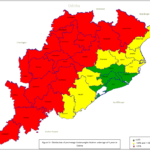
A quick preliminary analysis of the district level NFHS – 4 data on child malnutrition levels, reveals certain important aspects.